Exhausts, Catalysts and DPF'S
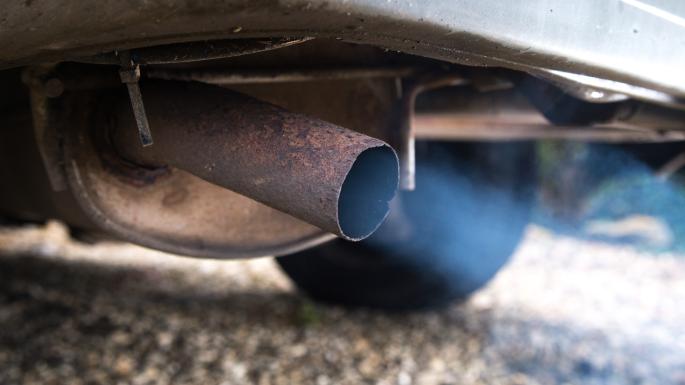
Your exhaust has four main functions: to control noise, to direct exhaust fumes away from passengers, to improve the performance of the engine and to improve fuel consumption. These exhaust gases then travel through a catalytic converter which removes harmful elements including carbon monoxide and hydrogen monoxide which are converted into inert gases, on modern diesels they will also travel through a DPF Filter trapping all the soot particles. The gases then pass through a silencer or muffler. It's only when you hear a car with a damaged silencer that you realise what a huge difference it makes to reducing noise levels. Any problems with your exhaust are usually immediately noticeable, from a knocking and banging under your car, a very loud exhaust, strange rattles or reduced performance and engine warning lights illuminated. CARS Mobile Mechanic is able to come and solve these problems and more form the comfort of your own home.

Broken / Leaking Exhausts
Corroded exhausts is our most common reason to replace or repair a section of your exhaust, being on the underside of the car, getting constantly heated and cooled then wet and dried, they are very susceptible to corrosion, eventually leaving a hole or just snapping in half... Your vehicle’s exhaust system keeps the car quiet and the exhaust fumes away from the cabin. Furthermore, the system helps to keep the engine running properly, reduce emissions, and provide you with optimum fuel efficiency. Driving with an exhaust leak is potentially dangerous as the fumes contain carbon monoxide. The biggest symptoms of a failing / failed exhaust are: Knocking and rattling under the car - especially over bumps Being able to smell fumes whilst driving Exhaust sounds louder and more of a rumble than normal - especially on acceleration. If you have any of the above symptoms get in touch and CARS Mobile Mechanic will come to you and inspect your exhaust and provide you with a myriad of repair options from a simple repair bandage, replacement exhaust section all the way to a fully stainless performance upgrade, all fitted on site at your home or work address.
Catalysts
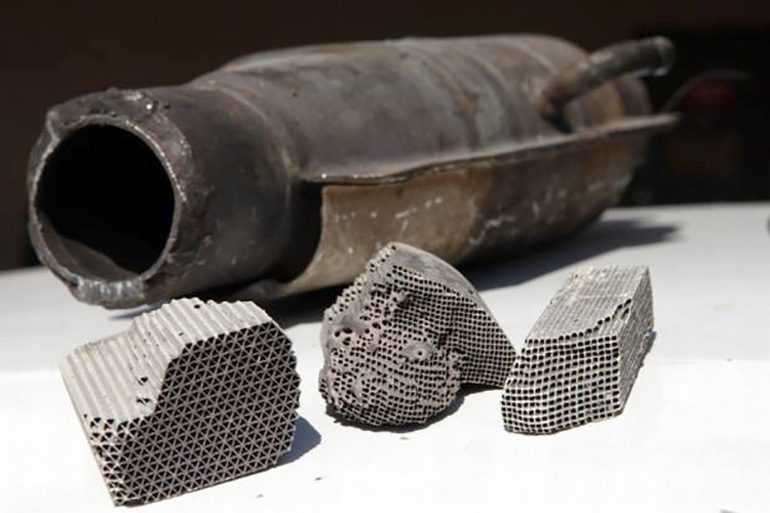
Your exhaust produces harmful emissions of hydrocarbons, carbon monoxide and nitrogen oxides that are damaging to the atmosphere if released into the air. A catalytic converter substantially reduces the amount of harmful pollutants by taking these gases and converting them into water vapour and less harmful gases via a series of chemical reactions. Catalytic converter issues can lead to increased exhaust emissions and a decrease in engine performance. Most issues stem from temperature changes in the exhaust system. Excessive unburnt fuel in the exhaust can cause the catalyst to reach extremely high temperatures which can cause damage to the fine catalyst material. As a result, the catalytic converter becomes less effective, less chemical conversions take place and the exhaust output contains more harmful gases, damaged or failing lambda sensors can also destroy a perfectly good cat. Similarly, rapid cooling of the catalytic converter, such as by being submerged in water, can cause the internal honeycomb structure to break apart and obstruct the exit to the exhaust pipe. If the catalytic converter becomes plugged, engine efficiency and power will decrease noticeably, however most just wear out with age, the precious metals inside can no longer contribute to the chemical conversion process and you unexpectedly fail an MOT on emissions. CARS Mobile Mechanic can supply and fit genuine, cheaper aftermarket or even sports high flow catalysts to your car, at your home or work address.

DPF'S
The abbreviation stands for diesel particulate filter, and as its name suggests, its purpose is to stop tiny but toxic particulates being emitted from your car’s exhaust. But the way many DPFs work can cause problems. Because diesel engines burn fuel differently to petrol ones, a lot of soot is created as a byproduct of the combustion process. This fine, almost invisible substance can cause significant health issues in the environment; it’s the DPF’s job to trap and destroy them before that can happen. DPFs became standard in 2009, but some diesel models were fitted with the technology before this date. Its currently the fashion to chop them off, but you will NOT pass an MOT without one.... While a DPF’s first job is to trap and hold onto harmful particulates, it needs to get rid of them, too. The DPF does this by exposing them to very high temperatures, burning them and turning the particulates into harmless ash, in a process called DPF regeneration. The DPF can start regeneration in a couple of ways, but both need the exhaust gases to get extremely hot – usually around 500 degrees Celsius, which is twice as hot as a domestic oven. ‘Passive regeneration’ takes place when you drive your car at speed for several minutes at a time, for example on a motorway, and doing this regularly should burn off the particulates in the DPF automatically. However, many drivers who live in towns and cities, or who only drive short distances, won’t get their exhaust to a high enough temperature for ‘passive regeneration’ to occur. This can lead to soot building up, eventually blocking the DPF and causing engine problems like reduced fuel-efficiency and a turbo that struggles to boost. A warning light may also appear on the dashboard and put the car in "limp" mode. If you don’t drive at speed often, the engine will try to clear the DPF via ‘active regeneration’. This is where the engine lets the exhaust gases get hot enough to burn off the soot without requiring the car to be run at speed, by altering injection timing and quantity. CARS Mobile Mechanic currently offers 3 ways to fix your DPF problems: A forced regen - we cant do this on every car but using the diagnostics computer we can force the car to regen the DPF. Cleaning - we remove the DPF take it to a specialist and have them flush it and test it, returning and refitting it with a warranty certificate and before and after flow results. Replacement - very expensive and rarely needed, but there are some DPF'S out there too far gone to be rescued
EGR Valves
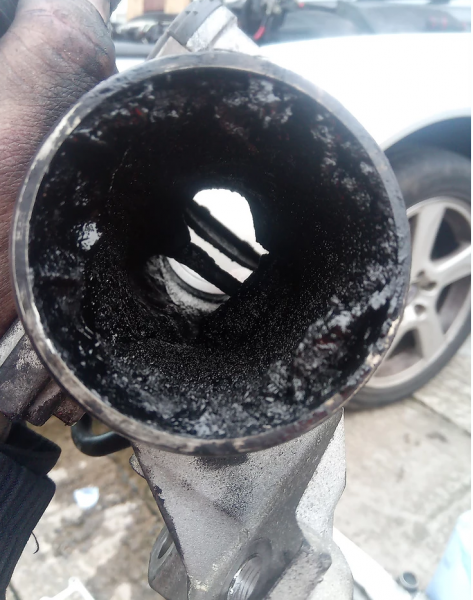
Exhaust Gas Re-circulation Valve.... A faulty EGR valve can cause problems with the flow and operation of the EGR system leading to performance issues including a reduction in power, reduced acceleration and decreased fuel efficiency. It can also cause vehicle emissions to increase. A faulty EGR valve can cause problems with the flow and operation of the EGR system leading to performance issues including a reduction in power, reduced acceleration and decreased fuel efficiency. It can also cause vehicle emissions to increase. EGR valves can become stuck ‘open’ or ‘closed’ due to a build-up of soot particles, carbon deposits and dirt from fuel. Motorway driving conditions are the most favourable to your EGR valve as longer, faster journeys allow the engine to get hot enough to get rid of carbon deposits. Whereas urban driving conditions can allow these deposits to build up, and your valve ends up looking like the one above. EGR valve symptoms can vary, however the most common symptoms of a faulty EGR valve are explained below: Your engine has a rough idle: A rough idle when starting your vehicle or during brief stops (i.e. low engine speeds with a warmed-up engine) can be caused when the EGR is constantly open and a continuous flow of exhaust gases goes into the intake manifold. Your car has poor performance: Poor performance can be caused when the valve is open or closed. Incorrect function of the EGR valve can cause erratic performance of your vehicle. You have increased fuel consumption: Increased fuel consumption is caused when the valve is constantly open. This is because the temperature is lower so fuel does not burn at the optimal temperature and as a result is less efficient. Your car frequently stalls when idling: Stalling when the engine idles, like a rough idle is usually caused when the EGR valve is permanently open and is constantly letting exhaust gases into the inlet system. You can smell fuel: You can usually smell fuel if there is a continuous flow of exhaust gases into the intake manifold, because at low revs not all the fuel burns. This means the amount of hydrocarbon gases emitted from the tailpipe increases significantly producing a fuel smell. Your engine management light stays on: Your engine management light may stay on once your car detects an issue with the EGR valve. This could be caused when the EGR is either constantly closed or open. However it is worth noting that usually the EGR valve starts to degrade before it fails completely and the engine management system may not pick up on it until it actually fails. Therefore it is worthwhile looking out for the other signs and symptoms mentioned. Your car produces more emissions: When your EGR valve isn’t working correctly more emissions will be emitted. As aforementioned if the valve is stuck open the temperature is lowered which prevents all the fuel from burning. This means an increased flow of unburned hydrocarbon gases coming out of the tailpipe. While if your valve is always closed the high temperatures in the combustion chamber allow excessive formation of NOx gases. You hear knocking noises coming from the engine: Knocking noises from the engine can be caused if the EGR is constantly closed. This is because at low rpm the fuel ignites early when it meets the high temperature. Detonations are also common as a second ignition can occur after the normal ignition. EGR valves can be very expensive to replace, making cleaning an affordable cost effective alternative. C.A.R.S Mobile Mechanic can remove, clean and refit EGR valves and throttle bodies at your home or work, resulting in improved fuel economy, throttle response and emissions.